Tasmania – Australia’s Island State
📍 Location: Tasmania, Australia
📅 Date Visited: Sun, Aug 6 – Sun, Aug 13, 2023
⏱️ Time Spent: Seven days traveling around Tasmania
Cradle Mountain
🚗 Getting There
From Maylands, reaching Tasmania is a journey of approximately 3,800 km. We flew from Perth direct to Hobart (4 hours).
🚙 Our Trip
There I was, fresh out of COVID lockdown hell, staring at my work desk like it had personally betrayed me. You know that moment when you physically cannot look at another spreadsheet? That. So I muttered into the void — “I need to go on a holiday, urgently” — and I swear on my life, ten seconds later my phone buzzes with flights to Tasmania.
Now, Big Telecom will deny it. They’ll claim it’s “just algorithms” and “targeted advertising.” Bullshit. My phone heard me. It felt my desperation. One minute I’m contemplating faking a mild illness to escape work, the next minute Virgin Australia is sliding into my DMs like a mate who was definitely eavesdropping on my existential crisis.
Can’t remember the exact damage, but it was direct to Hobart, return, and under five hundred bucks. That’s not a sale — that’s the universe saying “get out before you do something stupid” I contacted Magda to inform here she was traveling to Tasmania, and make plans.
Best decision I made all year.
⛏️ Brief History
Tasmania’s story spans roughly 40,000 years of human habitation, beginning with the Aboriginal Tasmanians (Palawa) who crossed the land bridge from mainland Australia when sea levels were lower. They developed distinct cultures across nine language groups, adapted to the island’s cooler climate and unique ecology.
European arrival came relatively late. Dutch explorer Abel Tasman sighted the island in 1642, naming it Van Diemen’s Land after the Governor of the Dutch East Indies. French and British explorers followed in the late 18th century, but permanent European settlement didn’t begin until 1803 when the British established a small outpost at Risdon Cove, soon moving to Sullivan’s Cove (modern Hobart). The settlement’s primary purpose was strategic—to prevent French claims and to receive transported convicts.
The convict era (1803–1853) fundamentally shaped Tasmania. Approximately 75,000 convicts were sent there, roughly 40% of all convicts transported to Australia. Notorious penal stations like Port Arthur (established 1830), Sarah Island, and the coal mines of the Tasman Peninsula employed brutal systems of punishment. Simultaneously, free settlers arrived, establishing farming and whaling industries.
Frontier conflict devastated the Palawa population. Introduced diseases, displacement, and violent clashes reduced the Aboriginal population from an estimated 3,000–7,000 at settlement to just a few hundred by the 1830s. The “Black War” (1824–1831) saw organized Aboriginal resistance met with military reprisals. In 1833, survivors were exiled to Wybalenna on Flinders Island under the pretense of protection; many died there. Truganini, often called the “last full-blooded Aboriginal Tasmanian” (though this framing is disputed), died in 1876.
Economic development shifted through the 19th century. Whaling dominated early colonial commerce, followed by wool and grain exports. The discovery of copper at Mount Lyell (1892) and tin at Renison Bell established mining as a cornerstone industry. Hydroelectric development began in the 1890s and expanded dramatically in the 20th century.
Modern Tasmania was created in 1856 when the colony was granted responsible self-government and renamed Tasmania, shedding the convict stigma. It became a state of Australia in 1901. The 20th century saw struggles between development (particularly hydro-industrialization under the Hydro-Electric Commission) and conservation, culminating in the successful 1982–83 campaign to stop the damming of the Franklin River—a turning point for Australian environmentalism.
Today Tasmania is known for its wilderness (40% of the island is protected), gourmet food and wine industries, and as the only place in Australia where same-sex marriage was briefly legal before national legislation caught up.
🗺️ What to Expect
If you’re coming from the mainland, expect Tasmania to feel like a different country that happens to use the same currency. The pace is slower, the air is cleaner, and the weather will teach you humility.
The weather is its own character. “Four seasons in one day” isn’t a slogan—it’s a warning. You can start a hike in sunshine, get hailed on at the summit, and finish in fog. Pack layers, always carry a rain jacket, and don’t trust a clear morning.
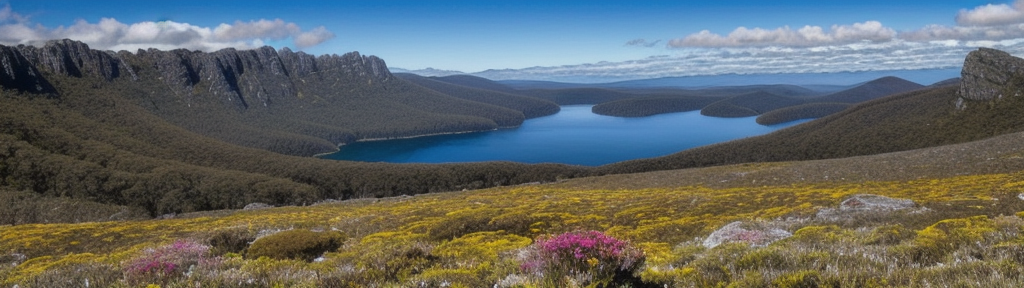
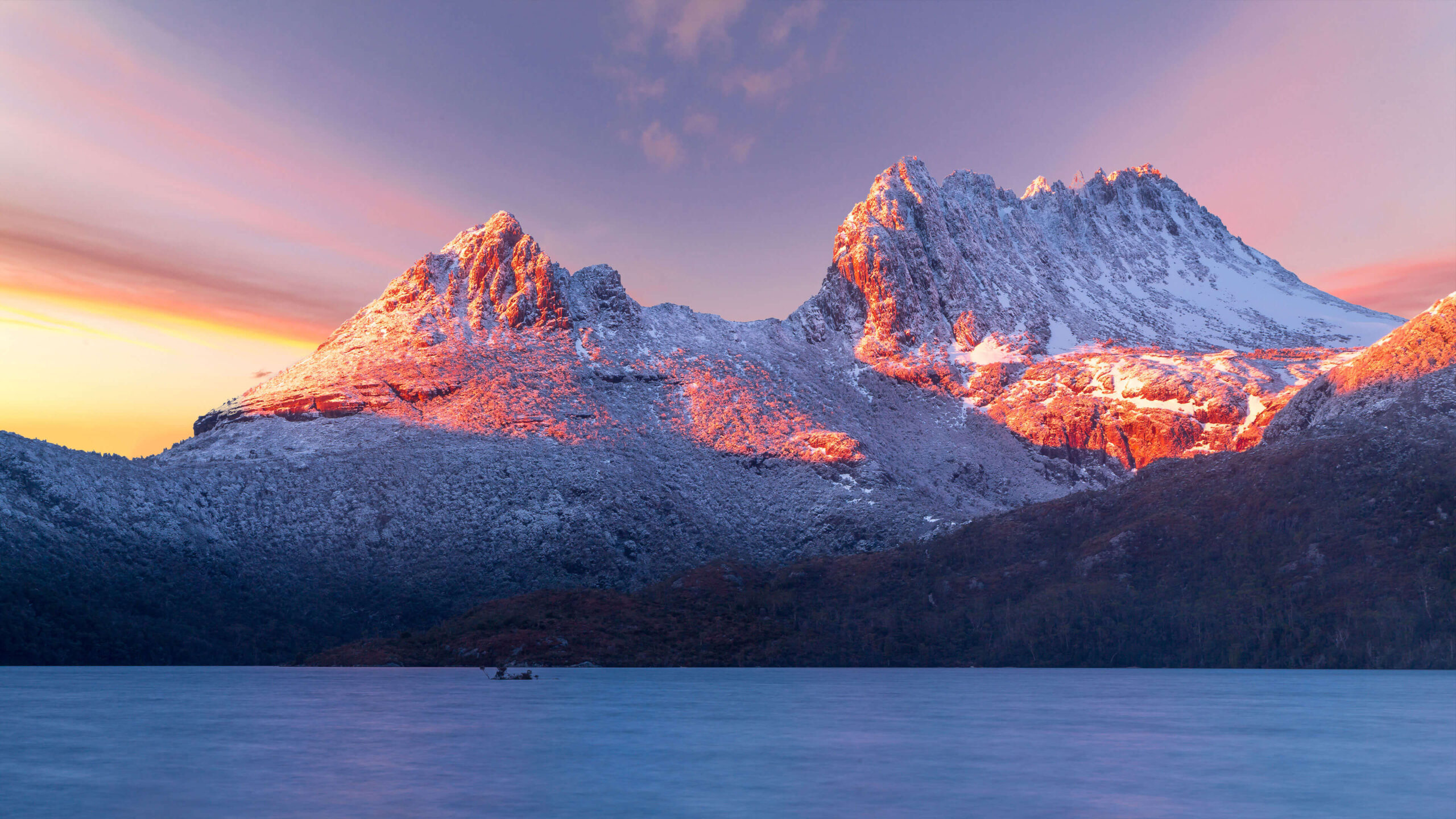
The landscape punches above its weight for a small island. Cradle Mountain’s alpine terrain looks like Patagonia. The Tarkine’s temperate rainforest feels prehistoric. The Bay of Fires has genuinely white-orange granite boulders against turquoise water. And the southwest is genuinely wild—no roads, just raw wilderness. If you’re driving, expect narrow winding roads with unexpected tourist traffic doing 40km/h to photograph a paddock full of sheep.
Wildlife actually appears. Pademelons (small wallabies) will wait outside your cabin at dusk. Wombats wander the campgrounds. Tasmanian devils exist and sound like screaming demons if you’re camping near them. The birdlife is ridiculous—giant robins, honeyeaters, cockatoos that sound like car alarms.
The food scene has become serious business. This isn’t deep-fried mainland Australia. Think: Bruny Island oysters eaten on the beach, cool-climate pinot noirs from the Tamar Valley, whiskey distilleries that could compete with Scotland, sheep’s whey vodka, wallaby salami, leatherwood honey that tastes like the rainforest smells. The farmers’ markets (Salamanca in Hobart, Harvest Market in Launceston) are genuine events where producers sell their own stuff.
History is heavy. Port Arthur isn’t a theme park—it’s a beautifully preserved wound. The convict sites (Sarah Island, Cascades Female Factory) don’t sanitize the brutality. The Aboriginal history, particularly the trauma of the Black War and Wybalenna, is increasingly acknowledged but still raw.
Practical realities: It’s bigger than you think. Hobart to Cradle Mountain is 3.5 hours of solid driving. The ferry (Spirit of Tasmania) takes 9–11 hours and booking ahead is essential; flying is obviously quicker but you miss the romance of arriving by sea. Winter (June–August) is genuinely cold—snow on the mountains, frosts in the valleys, but also empty walking tracks and cheap accommodation.
One real warning: Tassie time is real. Some cafes close at 2pm. Many places shut entirely in winter. If you’re the type who needs 24/7 everything, this might frustrate you. But if you can slow down to the local rhythm, it’s worth it.
🏛️ Things to See
[Things to see in Tasmania will go here…]
📸 Photo Gallery
Highlights from our visit:
🎠 Trip Photo Carousel
💡 Travel Tips
- [Tip 1]: [To be added…]
- [Tip 2]: [To be added…]
- [Tip 3]: [To be added…]
- [Tip 4]: [To be added…]
No responses yet